In an era of ultra-accelerated synthetic fashion, Japan's heritage textile corridors remain the global pinnacle of tactile integrity, low-tension weaving, and generational craftsmanship.
Kojima & Kurashiki: The Sacred Capital of Selvedge Denim
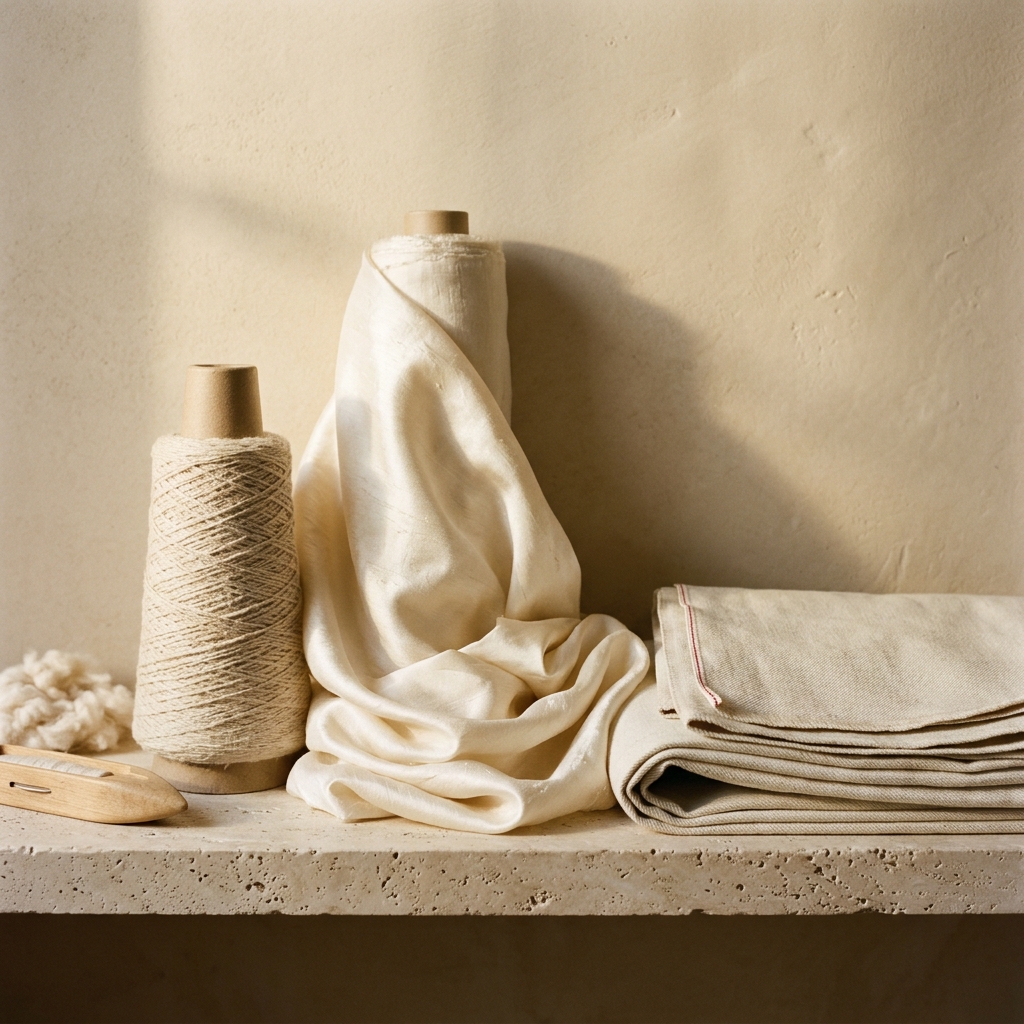
Situated along the Seto Inland Sea in Okayama Prefecture, the town of Kojima is universally recognized as the denim capital of the world. Here, vintage Toyoda G3 automatic shuttle looms—restored from the mid-twentieth century—operate at slow, rhythmic speeds that gently weave heavy cotton yarn without artificial tension.
The result is selvedge denim with rich, irregular slub texture (atari) and natural nep that wears into unmatched, high-contrast fades over years of use.
Working directly with Kojima mills requires a clear technical spec sheet: brands must specify yarn count (e.g. 6x6 or 7x7 ring-spun), ounce weight (ranging from 12oz summer weight to 21oz heavyweight monoliths), and whether the warp yarns are rope-dyed with synthetic pure indigo or slow Hank-dyed with natural botanical Aizome indigo.
“Japanese shuttle loom denim cannot be rushed. The slight imperfections in the weave are not defects; they are the physical signature of artisanal character.”
Bishu: The Undisputed Epicenter of Fine Worsted Wool
Spanning the border between Aichi and Gifu Prefectures along the Kiso River, the Bishu region is responsible for over 70% of Japan's domestic wool production and supplies Europe's top luxury maisons.
Blessed with exceptionally soft subterranean water ideal for scouring, dyeing, and fulling raw fleece, Bishu weavers utilize rare vintage Schönherr rapier and shuttle looms. These mechanical workhorses interlace superfine Australian merino wool and Mongolian cashmere with a loft, drape, and spring-back recovery that modern high-speed air-jet looms cannot replicate.
For contemporary tailored jackets, overcoats, and luxury trousers, Bishu mills offer deadstock small-batch runs and custom color development with minimums often starting at just 50 to 100 meters per colorway.
Protocols for Sourcing in Japan
Japanese mills value generational continuity and technical clarity over aggressive order volume. Approaching these mills successfully requires well-prepared technical tech packs, prompt and courteous communication, and respect for lead times (often 60 to 90 days for bespoke weaves).
Establishing a direct account with a vetted Okayama weaver or Bishu spinner eliminates agency markups of 30% to 50% commonly added by Western trading intermediaries.
Executive Sourcing Protocol · Field Recommendations
- •Specify exact warp/weft counts and loom specifications (e.g. vintage Toyoda G3 or Schönherr) when requesting swatches.
- •Take advantage of low-MOQ fabric trial runs (50m–100m) before committing to seasonal collection yardage.
- •Account for 60 to 90 days weaving lead times for custom indigo shades or bespoke wool patterns.
- •Verify international export terms (FOB Osaka or Tokyo) and establish forwarder consolidation early.
Direct Manufacturing Access: Japan
Explore verified factory dossiers in Okayama / Kojima.